I thought I would relay something that happened today. I’m replacing the fire suppression system in my Vintage FF. With the rule changes this year where it suggests that we should be running SFI or FIA approved systems. See discussion thread regarding systems FV/Open Wheel fire system . I didn’t know what the providence of the system that was installed, as it came with the car when I bought it in ‘18. So I thought I should replace my system, even though it looked ok.
It is(was) a Firebottle 5lb Halon system, manual discharge t-handle on the dash, bottle installed on the floor in front of the seat, plumbed to cockpit and engine area, like most are. The gauge, which was rotated toward the floor, gauge showed that it was charged in the green range though toward the bottom of the gauge range. From appearances it all seemed fine. With a dump bottle it isn’t something you can really test. You can check the gauge an wiegh them out of the car. Once installed it’s there and you hope it all works when you need it.
So these systems operate with a trigger wire that goes through the bottle head valve which is remotely activated with a t-handle on the dash or somewhere accessible by driver/course-worker. When the wire or pin is in place keeps the system armed and prevents the system from discharging. If the trigger wire is pulled with the safety pin removed, the system will discharge. So when I was disassembling I found the following on my installed system.
First off it was a halon bottle, which I wasn’t sure of thinking it could be CO2. It was dated 1997 (label was also facing the floor and under the mount so couldn’t be read without removing it.) The first real surprise was when I pulled the activation trigger cable out, with safety pin inserted in the head, I discovered that it only protruded about 3/8” out the end of the external sleeve. No way it would reach the head at that length.
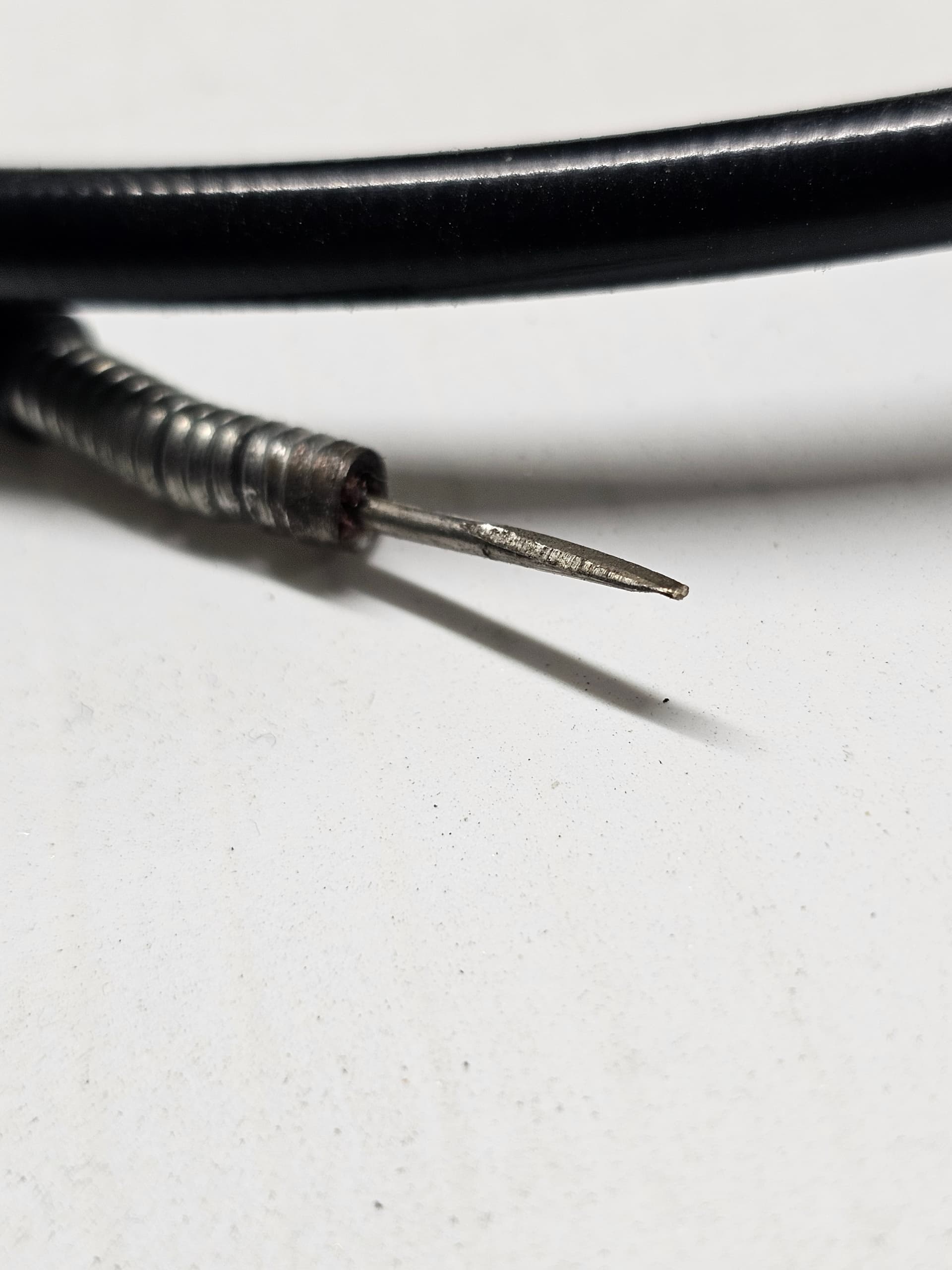
I then realized that the safety pin wasn’t engaged in the head either. Now I know why the pin would not go all the way through the head. This system would not have worked in an emergency. Once I pulled the bottle it seemed way too light to be charged. Once I got it all out I put the bottle on a scale. 2.94lbs total.
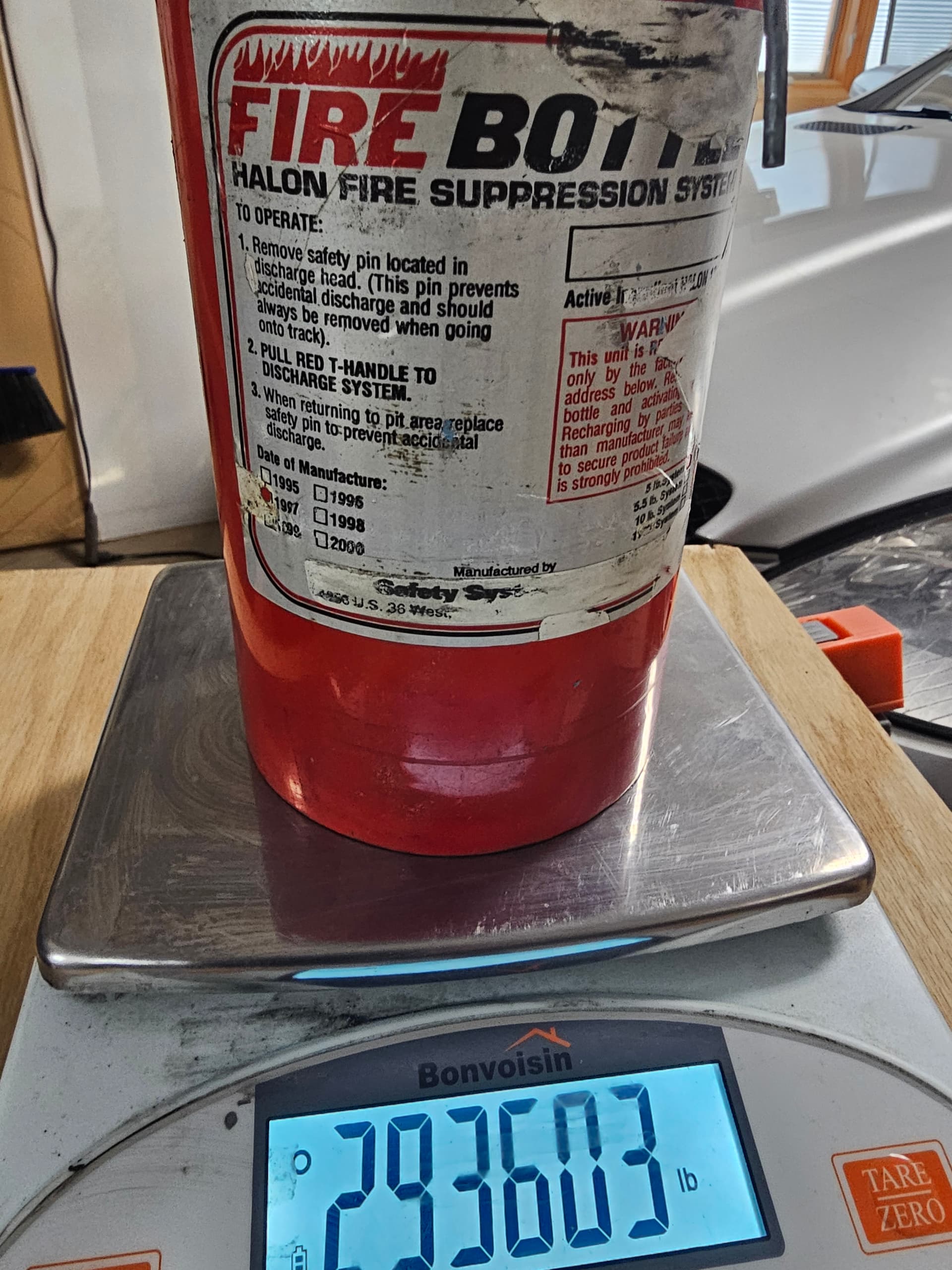
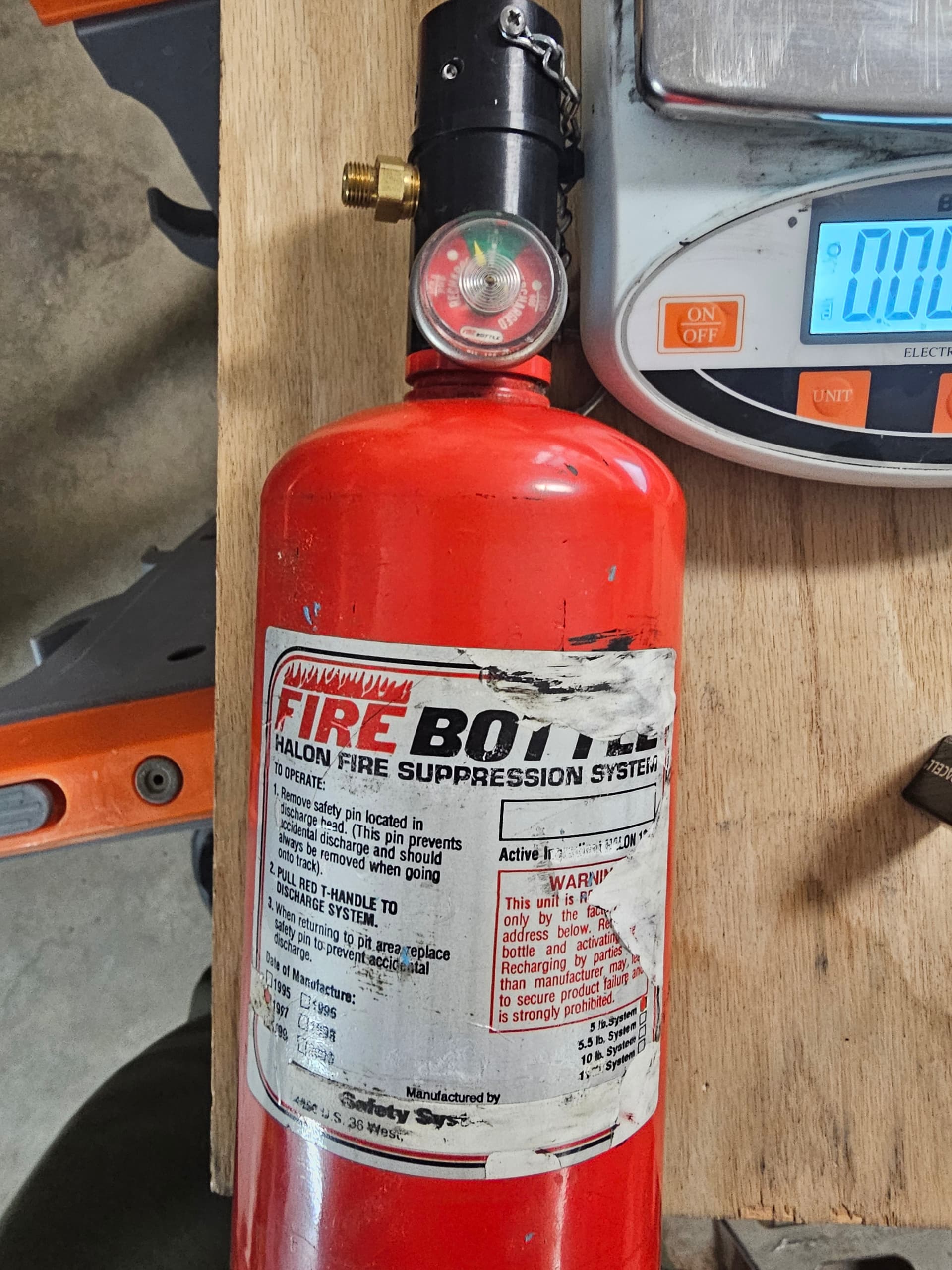
This bottle has been discharged sometime in the past even though the gauge still shows that it’s “OK”. (If you zoom in on attached pic you can see it still shows in the green on the guage.)
Moral of this story. Make SURE your safety equipment is up to specification and will work in an emergency!
